
This project investigates how generative video models can maintain a consistent world over long horizons. Current models condition on recent frames or on externally maintained 3D reconstructions, so scene content is either forgotten as it recedes in time or tied to geometry that must be estimated and stored as the environment grows. We aim to develop implicit memories addressed by viewing geometry, where each observation is written into a fixed-capacity learned state at a location determined by the camera, so that revisiting a place recalls what was there before at a cost that does not grow with the length of the video.


Konrad Schindler is a Full Professor in the Department of Civil, Environmental and Geomatic Engineering at ETH Zurich, where he leads the Institute of Geodesy and Photogrammetry. His research primarily focuses on photogrammetry, remote sensing, computer vision, and image understanding, driving advancements in these critical fields. His work contributes significantly to the scientific community, enhancing our understanding of geospatial data and imaging technologies.
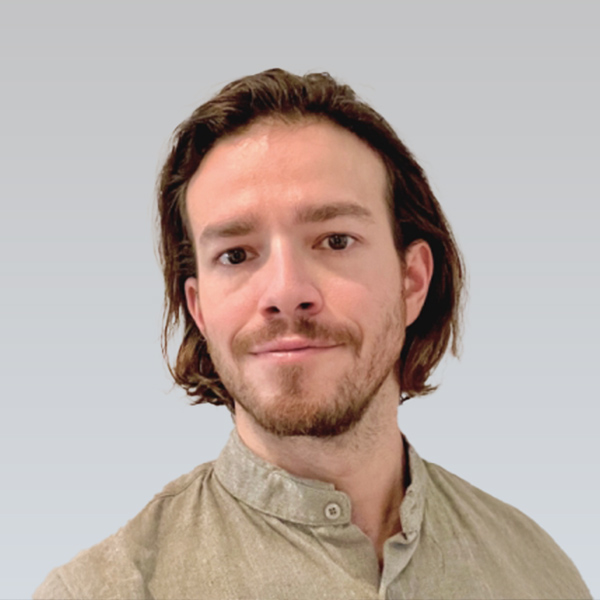
Dr. Dominik Narnhofer is a Computer Vision/Machine Learning Researcher serving as a senior researcher at the Photogrammetry and Remote Sensing Group (D-BAUG) at ETH Zurich.

Federico Tombari is a Research Director at Google Zurich, Switzerland, where he leads an applied research team in Computer Vision and Machine Learning across the US, Switzerland, and Germany. He is also affiliated with the Faculty of Computer Science at TUM as a lecturer (PrivatDozent) at the CAMP Chair. An up-to-date list of publications is available at his Google Scholar. Federico Tombari's research activity is focused on different aspects of computer vision and machine learning, with a focus on 3D computer vision (e.g. scene understanding, 3D object recognition, 3D reconstruction, SLAM). The fields of application of his research are mainly in robotics, augmented reality, autonomous driving and healthcare. He is currently particularly excited about unsupervised learning for visual data, Large Multimodal Models, (Neural) Radiance Fields, and scene graphs for scene understanding.
